Are you trying to decide whether Memphis itself gives you the best fit, or if more space in the suburbs is worth the extra drive and higher price tag? That is a common question for buyers across Shelby County, especially when you want the right mix of budget, layout, and daily convenience. The good news is that the Memphis area gives you several distinct options, and each one makes more sense when you compare the numbers side by side. Let’s dive in.
Start With the Right Tradeoffs
When you buy in the Memphis area, the decision is usually not just “city versus suburb.” A more useful way to think about it is price floor, housing form, and commute.
If your top priority is a lower entry price and more housing variety, Memphis often stands out first. If you want a more suburban feel without going too far from the city, Bartlett is often the middle-ground choice. If you want a stronger single-family, space-oriented profile, Germantown and Collierville usually sit on the premium end, while Lakeland and Arlington often appeal to buyers who are comfortable trading more drive time for more room and newer subdivision-style housing.
Memphis Offers the Lowest Entry Point
For many buyers, budget is where the search really begins. In the Memphis metro area, the March 2026 median sale price was $223,000, according to MAAR. That same report puts the median sale price for existing homes at $210,000 and new homes at $477,425, which helps explain why many newer suburban options can feel like a major jump in cost.
Within the local price ladder, Memphis has the lowest median sale price at $210,000. That can make the city especially appealing if you want more flexibility in your budget, or if you are trying to keep your monthly payment in a more comfortable range.
That lower price point can also open more choices. Instead of stretching for square footage in a higher-priced suburb, you may find that Memphis gives you more room to compare neighborhoods, housing types, and renovation levels while staying closer to your target number.
Memphis Has the Most Housing Variety
Price is only part of the story. Memphis also offers the most mixed housing stock in the area, which can matter if you do not want your search limited to one style of home or one type of neighborhood pattern.
The City of Memphis Consolidated Plan shows occupied housing stock made up of 63.6% single-family detached, 5.1% single-family attached, 8.5% 2 to 4 units, 13.8% 5 to 19 units, 8.0% 20+ units, and 1% mobile home or other. That mix gives buyers more options if you are considering anything from a detached house to attached housing or smaller multifamily-style settings.
Memphis is also more renter-heavy than the surrounding suburbs, with 117,165 owner-occupied units and 134,421 renter-occupied units. From a buyer’s perspective, that means the city often has a broader range of housing forms and neighborhood patterns than the more single-family-focused suburbs around it.
Bartlett Is a Practical Middle Ground
If you want a suburban setting but still care a lot about convenience and price discipline, Bartlett often lands in the sweet spot. Its median sale price is $329,250, which places it above Memphis but below the premium suburbs farther east.
Bartlett also has a strong owner-occupied profile, with an 85.6% owner-occupied rate. That can appeal to buyers who want a more traditional suburban feel while staying within a price range that may still be more manageable than Germantown, Collierville, Lakeland, or Arlington.
For many buyers, Bartlett works well because it avoids the extremes. You are not choosing the lowest price floor, but you are also not jumping straight into the highest suburban price points. That balance is a big reason Bartlett often makes sense for move-up buyers and first-time buyers who want a suburban compromise.
Germantown and Collierville Lean Premium
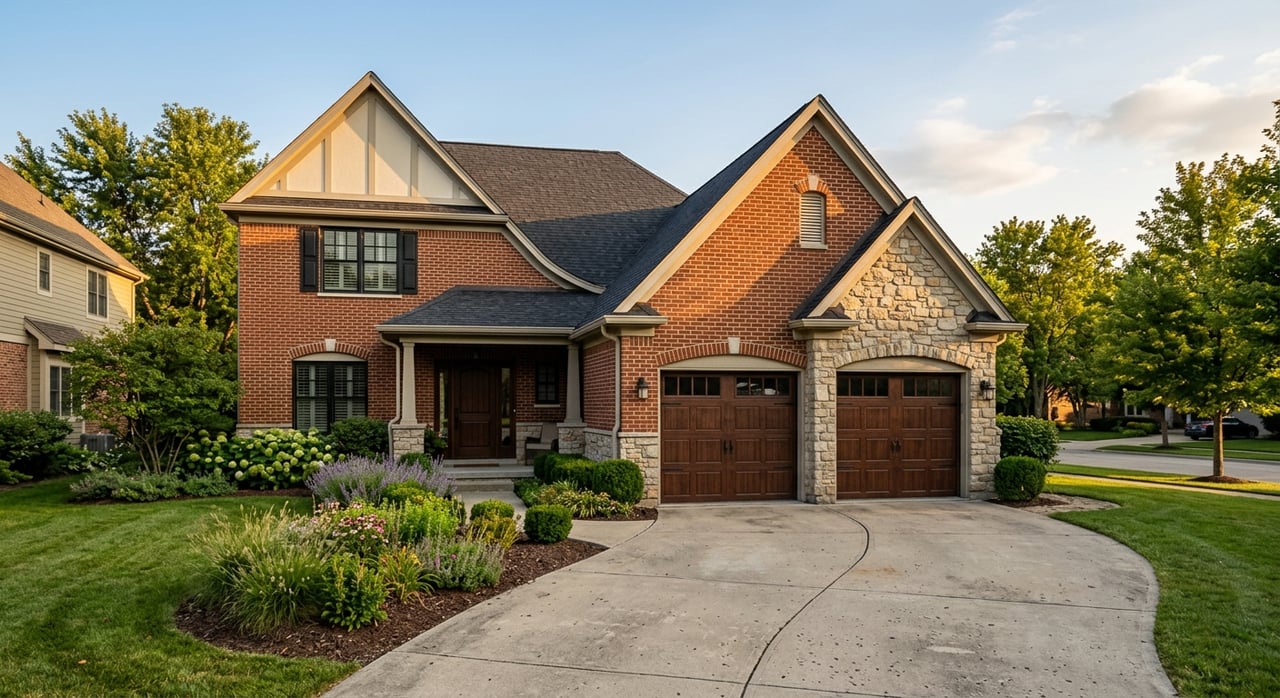
If your wish list centers on more space, detached homes, and a clearly suburban layout, Germantown and Collierville are often the most direct fit. These communities sit much higher on the local price ladder, which reflects the premium many buyers pay for that housing profile.
Germantown’s median sale price is $480,000. Collierville’s median sale price is $555,000. Those numbers put both well above the metro median and far above the median sale price in Memphis.
The housing patterns help explain that gap. Collierville reports that 78.4% of its current housing inventory is single-family detached, and town planning materials note an effort to preserve a predominantly single-family community. Germantown planning documents also separate single-family detached housing from duplex, townhouse, and multifamily forms, reinforcing its strong detached-home identity.
For buyers, that usually means a clearer path to larger lot expectations, more conventional subdivision layouts, and a stronger single-family emphasis. The tradeoff is straightforward: you are typically paying more for that setting.
Lakeland and Arlington Offer More Room
Lakeland and Arlington often attract buyers who want more space and are comfortable being farther out. They fit well for shoppers who are looking for a newer-subdivision feel and do not mind adding some commute time to get it.
Lakeland’s median sale price is $475,000, and Arlington’s is $457,500. Those figures place them close to the upper suburban tier, even if they may appeal for somewhat different reasons than Germantown or Collierville.
In practical terms, these areas often make the most sense if your home priorities outweigh your desire to stay closer to the city core. If you want more room and are willing to build your routine around a longer drive, Lakeland and Arlington are often worth a closer look.
Commute Differences Are Real, but Manageable
A lot of buyers expect a dramatic commute split between Memphis and the suburbs. In reality, the differences in this area are often more incremental than extreme.
Census QuickFacts puts mean commute times at 21.1 minutes in Memphis, 22.1 minutes in Germantown, 24.4 minutes in Bartlett, 25.1 minutes in Collierville, 25.7 minutes in Lakeland, and 27.3 minutes in Arlington. Germantown’s city facts page also notes that City Hall is about 17 miles from downtown Memphis.
That pattern matters because it shows that some inner-ring suburban options can still feel convenience-friendly. The farther-out suburbs usually ask for a few more commute minutes, but not always a dramatic lifestyle overhaul. For many buyers, that makes the decision less about distance alone and more about whether the added space feels worth the cost and drive.
New Construction Changes the Math
If you are drawn to suburban growth areas, it helps to compare resale and new construction carefully. MAAR’s March 2026 report shows a wide spread between the median sale price of existing homes at $210,000 and new homes at $477,425 across the metro.
That gap is one of the clearest reasons buyers can feel sticker shock when they move from older in-city inventory to newer suburban construction. You may be gaining layout updates, newer systems, and a newer subdivision setting, but you are often paying a lot more to get it.
This is where a numbers-first approach really helps. Before you focus on finishes or square footage, it is smart to weigh how much that price jump affects your monthly payment, cash needed at closing, and flexibility after move-in.
How to Choose What Fits You Best
The best location for you depends on what you are trying to solve for. A lower purchase price, a specific home style, and commute convenience do not always line up in the same place.
Here is a simple way to frame the choice:
- Choose Memphis if convenience and a lower entry price matter most.
- Choose Bartlett if you want a suburban compromise between cost and access.
- Choose Germantown or Collierville if you want the strongest single-family, space-oriented profile.
- Choose Lakeland or Arlington if you are willing to trade more drive time for more room and a newer-subdivision feel.
If you are still narrowing it down, try ranking your top three priorities before you tour homes. For example, you might list monthly payment, layout, and drive time in order. Once you know your non-negotiables, the right part of the Memphis area becomes much easier to identify.
Use Numbers, Not Just Impressions
It is easy to fall in love with a kitchen, a big backyard, or a convenient address. But the smartest buying decisions usually come from matching the home to your daily routine and your long-term budget.
That is especially true in the Memphis area, where the market gives you a wide spread of prices and housing types across a relatively connected region. Looking closely at median price, housing form, and commute can help you avoid overbuying in one area or overlooking a better fit in another.
If you want help comparing Memphis, Bartlett, Germantown, Collierville, Lakeland, or Arlington in a more practical way, Mary Thornburg can help you sort through the numbers, narrow your options, and build a plan that fits your goals.
FAQs
What is the main difference between buying in Memphis and buying in the suburbs?
- The biggest differences are usually price, housing type, and commute. Memphis offers the lowest price floor and the most mixed housing stock, while many suburbs offer a stronger detached-home profile at higher price points.
What is the median home price in Memphis compared with Bartlett?
- Memphis has a median sale price of $210,000, while Bartlett has a median sale price of $329,250.
Which Memphis-area suburbs have the highest median sale prices?
- In this comparison, Collierville at $555,000 and Germantown at $480,000 are the highest-priced suburban options listed.
How much longer are commute times from Memphis-area suburbs?
- Mean commute times range from 21.1 minutes in Memphis to 27.3 minutes in Arlington, so the difference is often just several minutes rather than an extreme jump.
Is Bartlett a good middle-ground option in the Memphis area?
- Bartlett can be a practical middle-ground choice because it blends a suburban setting with a median sale price below Germantown, Collierville, Lakeland, and Arlington.
Why do new suburban homes in the Memphis area feel so much more expensive?
- MAAR reports a metro median sale price of $210,000 for existing homes versus $477,425 for new homes, which shows how quickly costs can rise when you target newer construction.