Thinking about buying land in Fayette County, TN? A beautiful parcel can be exciting, but raw land comes with questions that do not always show up in a standard home purchase. You need to know whether the site can actually support your plans, what it may take to make it build-ready, and where extra costs can appear. This guide will help you understand the key land-buying factors in Fayette County so you can move forward with more clarity and confidence. Let’s dive in.
Why Fayette County Draws Land Buyers
Fayette County gives you room to spread out while staying connected to the larger West Tennessee region. It has 41,990 residents and about 704.78 square miles of land area, and local sources place it roughly 30 minutes east of Memphis and along the I-40 corridor between Memphis and Nashville. For many buyers, that mix of space and access is a big part of the appeal.
Location matters here just as much as acreage. The county growth plan, effective March 1, 2024, separates areas into city limits, urban growth boundaries, a planned growth area, and rural area. That framework can help you compare a town-edge build site with a more remote rural tract.
Start With Buildability, Not Acreage
One of the biggest mistakes land buyers make is assuming that more acreage automatically means an easier build. In Fayette County, the first question is whether the parcel complies with zoning and can support the practical needs of a future home. Acreage is only one piece of the puzzle.
The county zoning resolution applies to unincorporated areas, and the county building-permit guide warns that a building permit can be denied if a parcel is nonconforming under county zoning, except in certain preexisting situations. In simple terms, you do not just want land that looks good on paper. You want land that works under current rules.
Understand the Three Common Land Buckets
A helpful way to think about Fayette County land is in three general categories. This is not a formal county classification, but it is a practical way to evaluate your options based on the county zoning and TDEC rules.
Smaller Build Sites
Smaller sites can work well, but they often need tighter planning. Setbacks, lot width, lot depth, frontage, and septic layout can all limit where a home can go.
One rural planned estate development standard in the county zoning resolution shows how geometry matters. It references 125-foot minimum lot width and depth, 80-foot setbacks from county or private road centerlines, 100-foot setbacks from state roads, and a 12 percent maximum ground coverage limit when individual septic is used. That is not a countywide rule for every parcel, but it shows why a lot can feel large and still be difficult to build on.
5-Acre-Plus Tracts
The 5-acre mark is important in Fayette County land conversations. TDEC says that when septic will be used, dividing land into two or more lots for future construction requires subdivision evaluation, but divisions into tracts that are all 5 acres or larger are not treated as a subdivision for that purpose.
The county zoning resolution also defines subdivision in a way that includes creating a lot smaller than 5 acres for sale or building development, or creating divisions that require new road or utility construction. That does not mean every 5-acre tract is automatically simple, but it can mean fewer subdivision hurdles in some situations.
Larger Acreage
With larger acreage, the main value questions often shift. Instead of asking only whether you can fit a house, you may also need to think about access, utility reach, driveway placement, drainage, and how much of the site is truly usable.
A larger parcel can offer flexibility, but it can also bring more prep costs. If utilities are farther away or access is more complicated, the lower purchase price per acre may not tell the full financial story.
Septic Rules Can Shape the Entire Deal
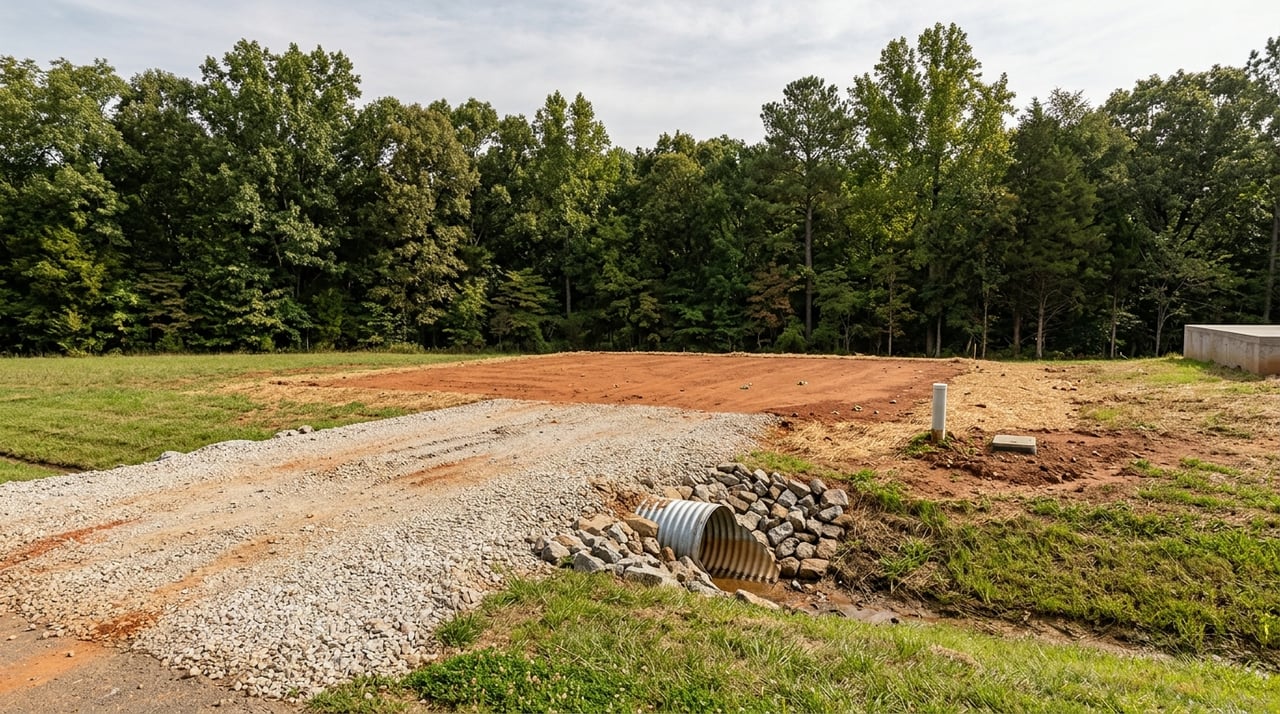
In many Fayette County land purchases, septic is one of the first due-diligence items to check. TDEC requires a conventional or alternative septic permit before construction, and it states that the permit should always be obtained before dirt work or a building pad is started. Fayette County also says septic approval must come before the county building permit, and that no clearing or grading should happen before the wastewater permit is issued.
That means your dream house plan should wait until the site is proven. If the soil, layout, or proposed location creates problems for septic, you may need to change the home placement, reduce the footprint, or reconsider the parcel altogether.
When Alternative Septic May Matter
Not every property will qualify for a standard septic setup. If a parcel needs an alternative system, TDEC requires an extra-high-intensity soils map prepared by a Tennessee-licensed soils consultant.
This is one reason early due diligence matters so much. A site that needs a more complex wastewater solution can change your budget, timeline, and build plan.
Utility Access Should Be Verified Early
Before you price the land, price the services. Utility availability can vary by address, and assumptions can get expensive fast.
Somerville lists city utilities that include gas, sewer, and water, and its water supply comes from five wells. In other parts of Fayette County, electric and gas providers may differ by location, with Chickasaw Electric Cooperative serving parts of the county and Hardeman-Fayette Utility District providing natural gas along part of Highway 57 from Middleton to Rossville.
The key takeaway is simple: verify the exact utility footprint for the parcel you want. You should confirm whether the property has access to public water, municipal sewer, septic, well service, natural gas, and electric service before you finalize your numbers.
Access, Roads, and Driveways Matter More Than Buyers Expect
A parcel is only as useful as its access. County zoning definitions distinguish public roads from private roads, so you should confirm whether the property has legal access, what type of road serves it, and who handles maintenance responsibility before closing.
Driveway planning can also affect cost and timeline. The county building-permit sheet lists public works for culvert sizing, which means drainage and entrance design should be reviewed early, especially on rural tracts where a long driveway may be part of the project.
If You Plan to Split Land, Learn the Rules First
Some buyers want to purchase acreage now and divide it later. If that is part of your plan, it is smart to investigate the process before you make an offer.
TDEC requires a survey and soils map for subdivision evaluation when septic is involved. The county zoning resolution also ties subdivision review to lot size, road creation, and utility construction. In other words, future splitting potential should never be treated as a guess.
Growth Corridors Can Affect Future Value
In Fayette County, location within the broader region can influence long-term appeal. The county economic-development office emphasizes the county’s position off I-40 between Memphis and Nashville, and county and state development materials highlight BlueOval City as a major project in the larger West Tennessee area.
For buyers, this does not create a guaranteed pricing formula. It does suggest that parcels with better road frontage, easier utility access, and favorable placement within the county’s growth framework may attract more attention than harder-to-serve land.
Building Activity Shows Ongoing Interest
Recent building-permit data points to continued construction interest in the county. The FRED series for new private housing structures authorized by building permits shows 336 units in 2023, 225 in 2024, and 356 in 2025.
Year-to-year totals can move around, but the broader message is useful. Buyers looking for site-ready land near growth corridors may face more competition when the path to building is simpler.
A Smart Fayette County Land Checklist
If you are comparing parcels, a steady process can help you avoid expensive surprises. These are some of the most important items to verify early.
- Confirm whether the parcel is in an incorporated town or unincorporated county area.
- Verify the zoning district and whether any special review or rezoning would be needed.
- Confirm legal access, road type, frontage, and any private road or easement issues.
- Review your water and wastewater plan, including public water, sewer, septic, or well needs.
- Order or review a survey if boundaries, easements, or future lot splits matter.
- Bring in a Tennessee-licensed soils consultant early if septic will likely be part of the build.
- Ask about culvert sizing, grading limits, and permit order before clearing the site.
- Compare not just land price, but also the time and money required to make the property build-ready.
Think in Total Cost, Not Just Purchase Price
This is where a numbers-first approach can really help you. A parcel with a lower list price may still cost more overall if it needs extra septic work, longer utility runs, more driveway construction, or added site prep.
When you compare land in Fayette County, look at the full picture. The real question is not only, “How much does this land cost?” It is also, “What will it take to turn this land into the kind of build site I actually want?”
If you want help weighing those tradeoffs, local guidance can make the process much smoother. Mary Thornburg brings a finance-forward, practical approach to buying land and build sites in West Tennessee, so you can make a decision with clearer numbers and fewer surprises.
FAQs
What should you verify before buying land in Fayette County TN?
- You should verify zoning, legal access, road type, frontage, utility availability, septic feasibility, survey details, and the permit sequence before closing.
How many acres do you need to build in Fayette County TN?
- There is no single countywide acreage number that guarantees buildability because the parcel still must satisfy zoning, setbacks, frontage, and septic requirements.
Why is the 5-acre mark important for Fayette County land?
- TDEC uses 5 acres as an important threshold because divisions into tracts that are all 5 acres or larger are not treated as a subdivision for septic evaluation purposes in the same way smaller splits may be.
Do you need septic approval before building in Fayette County TN?
- Yes, septic approval must come before the county building permit, and both county and TDEC guidance say you should not start clearing, grading, or dirt work before the wastewater permit is issued.
Why does utility access matter when buying Fayette County build sites?
- Utility providers and service areas can vary by address, so confirming water, sewer, electric, gas, septic, or well options early helps you estimate the true cost of making the site build-ready.
Can road access affect land value in Fayette County TN?
- Yes, legal access, frontage, road type, driveway requirements, and drainage considerations can affect both usability and the cost to develop the parcel.